Beyond the Horizon: A Guide to Evenings on Kaua’i’s North Shore
The North Shore of Kaua’i does not simply go dark when the sun sets. Instead, the landscape shifts into a different kind of theater. Staying at Ali’i Kai Resort puts you on a coastal plateau specifically situated for these transitions. Because Princeville faces the open Pacific and sits high above the water, you have a vantage point that most sea-level locations lack. This guide identifies the specific locations and times to witness the best evening light and clearest celestial views on the island.
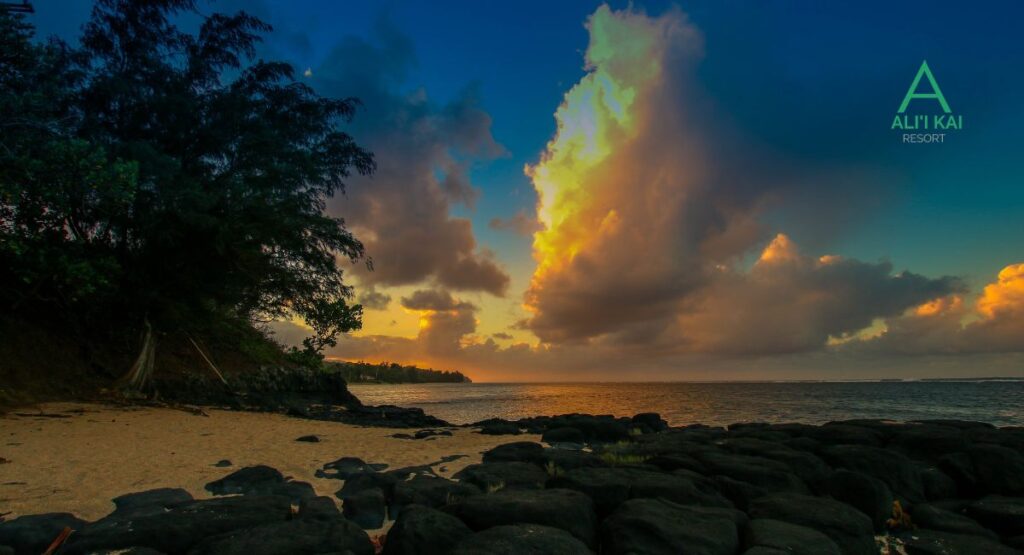
The Science of the North Shore Sunset
Kaua’i is the oldest of the main Hawaiian Islands, and its northern erosion has created a jagged skyline that interacts uniquely with evening light. Between April and September, the sun sets farther north, often aligning perfectly with the “Bali Hai” peaks of the Makana mountain range.
Hanalei Pier
The pier is a local landmark for a reason. Built originally for shipping and reinforced in the 1920s, it extends into the center of Hanalei Bay. To get the best experience, arrive by 5:45 PM. As the sun drops, the mountains to the west create high-contrast silhouettes. The water in the bay is usually calmer in the evening, reflecting the purple and gold tones in the sky.
The Princeville Bluffs
You do not need to leave the resort area for a world-class view. The walking path along the Princeville bluffs offers a 180-degree view of the ocean. At this elevation, you can often see the green flash. This is a rare optical phenomenon where a green spot or ray is visible for a second or two as the sun’s upper rim sinks below the horizon. This is only visible when the horizon is perfectly clear, a common occurrence from our North Shore cliffs.
Ke’e Beach
If you have a late-afternoon reservation for Ha’ena State Park, stay until the end of the day. Ke’e Beach is where the road ends and the Na Pali Coast begins. At sunset, the light hits the cathedral peaks of the Na Pali coast directly, turning the emerald ridges into deep shades of rust and copper. Note that the last shuttle usually departs shortly after sunset, so check the current schedule to ensure you have a ride back to your car.
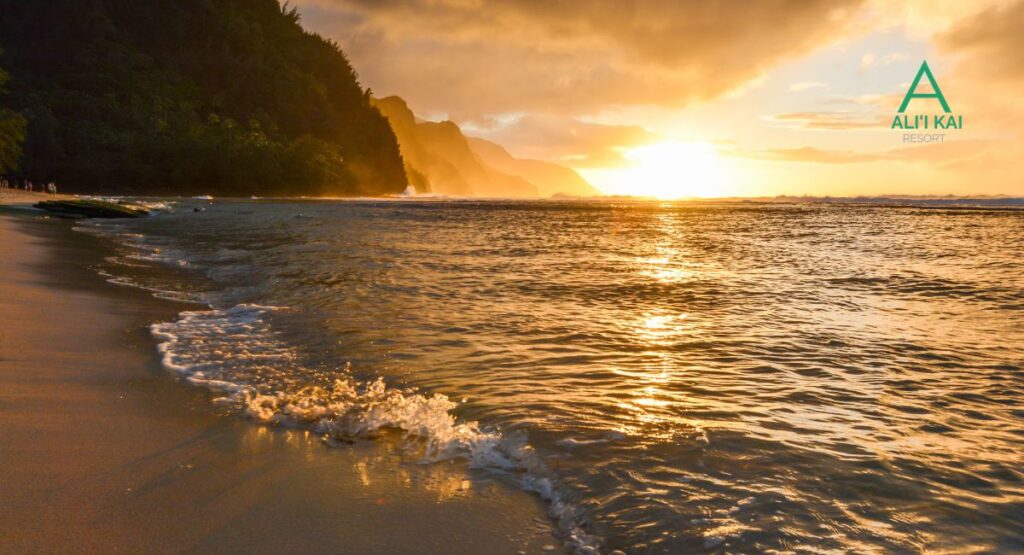
Navigating the Night Sky
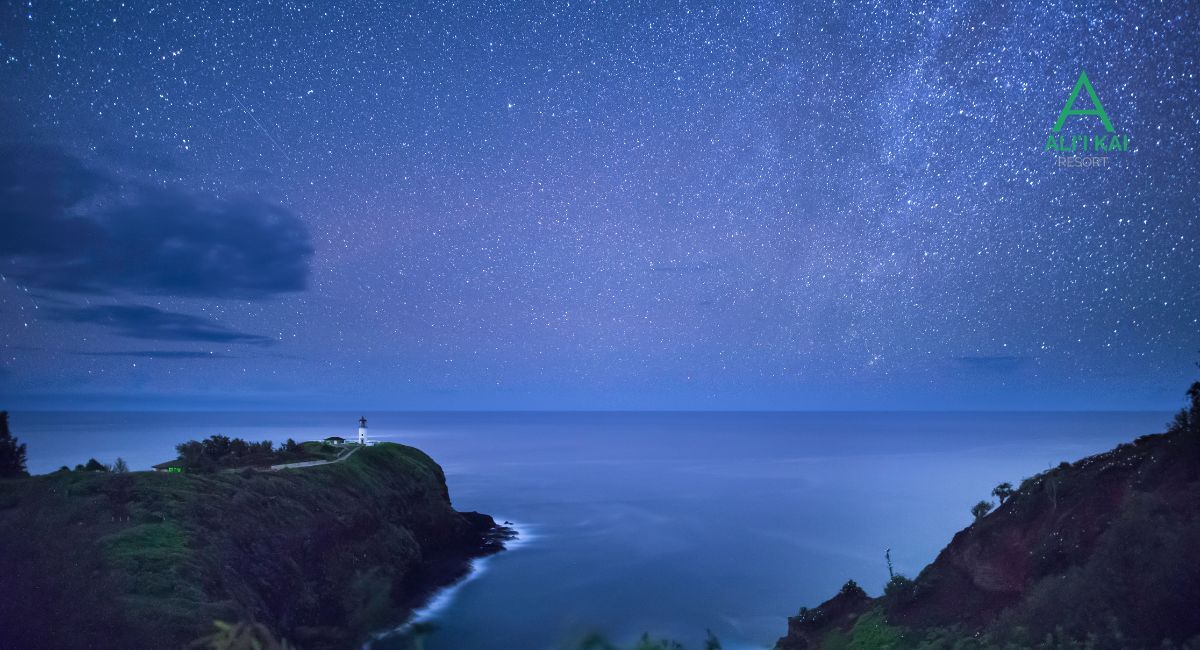
Hawaii is one of the best places in the world for stargazing due to its isolation and lack of mainland light pollution. The North Shore, specifically, has very few streetlights, which keeps the sky exceptionally dark.
Anini Beach
For the most immersive experience, drive ten minutes to Anini Beach. Because this beach is at the bottom of a cliff and shielded from the lights of the Princeville hotels, the darkness is profound. On a moonless night, the Milky Way appears as a bright, thick band of stars stretching across the sky.
Lanai Observations
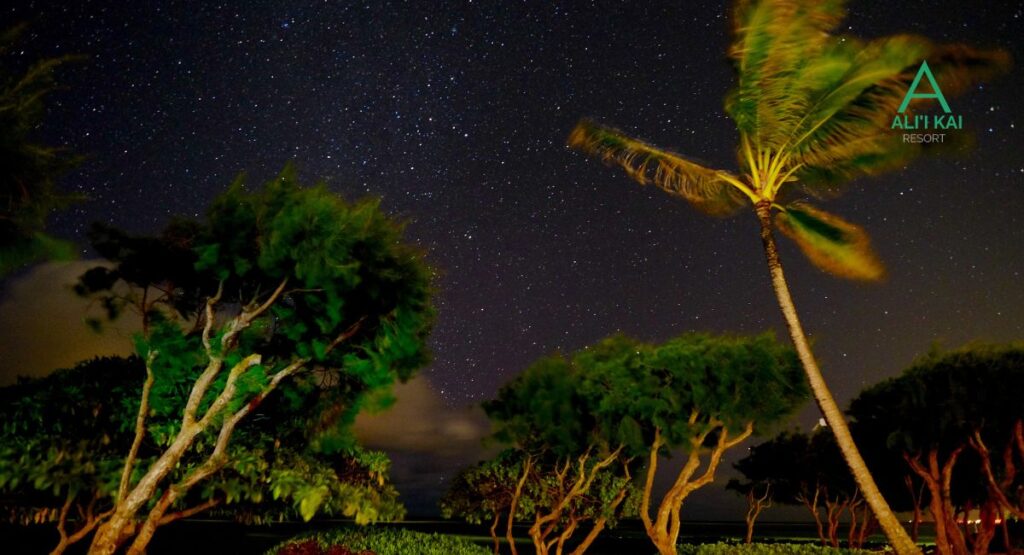
Your own lanai at Ali’i Kai Resort serves as a private observatory. Our resort layout prioritizes open space, meaning you have a wide window of the sky. Turn off your interior lights to let your eyes adjust. Within ten minutes, you will be able to identify the Southern Cross or the Big Dipper (known in Hawaii as Na Hiku).
Planning Your Evening Itinerary
A successful evening on the North Shore requires a little preparation. While the days are warm, the trade winds often pick up after dark, dropping the perceived temperature by several degrees.
-
Pack a Light Layer: A light windbreaker or a long-sleeved linen shirt is usually enough to stay comfortable while stargazing.
-
Lighting: If you are walking to the beach for sunset, bring a headlamp or flashlight. Coastal paths can be uneven, and the tropical darkness sets in quickly once the sun is down.
-
Red Light Filters: If you use a flashlight at the beach, cover the lens with red cellophane. Red light does not disrupt your night vision and is much less disturbing to nesting sea turtles or other coastal wildlife.
The Ali’i Kai Advantage
After the stars come out, the value of a two-bedroom condo becomes clear. Unlike a standard hotel room where everyone is in one space, our layouts allow for a natural end to the day. You can put the kids to bed in the second bedroom and still have the living area and lanai to yourself. You have the space to pour a glass of wine, set up a tripod for long-exposure photography, or simply listen to the ocean without waking the rest of your group.
Booking a stay at Ali’i Kai Resort isn’t just about having a place to sleep; it’s about having a home base that respects the pace of island life. You can cook a full dinner in your kitchen after a sunset hike, avoiding the wait times and noise of crowded restaurants.
FAQ
What time does it get dark on Kaua’i?
Because Hawaii does not observe Daylight Saving Time, sunset times don’t fluctuate as wildly as on the mainland. In the summer, the sun sets around 7:15 PM. In the winter, it is closer to 6:00 PM.
Can I see the Northern Lights from Kaua’i?
No, Kaua’i is too far south. However, you can see constellations that are invisible from most of the United States, such as the Southern Cross (visible in the spring and early summer).
Are the beaches safe at night?
Generally, yes, but be mindful of the tide and stay off the rocks. Stick to sandy areas at Anini or Hanalei for stargazing.